Long Distance Towing Regina: Moving Your Vehicle Across Saskatchewan Safely
You are relocating to Saskatoon for work, your vehicle broke down 300 kilometers from home, or you just purchased a car from a dealer in another city and need it transported back to Regina . Long distance towing is more than just a longer version of local towing—it requires specialized equipment, careful planning, and experienced operators who understand the unique challenges of transporting vehicles across hundreds of kilometers .
Professional long distance towing in Regina provides safe, secure vehicle transport throughout Saskatchewan and into neighboring provinces . Whether you need flatbed transport for a luxury vehicle, wheel-lift towing for a standard car, or heavy-duty equipment for commercial vehicles, understanding how long distance towing works helps you make informed decisions and ensures your vehicle arrives safely at its destination .
What Qualifies as Long Distance Towing?
While definitions vary, most towing companies consider any transport over 50-100 kilometers to be long distance . In Saskatchewan, common long distance routes include:
- Regina to Saskatoon: Approximately 260 kilometers via Highway 11
- Regina to Moose Jaw: 70 kilometers via Highway 1
- Regina to Prince Albert: 340 kilometers via Highway 6
- Regina to Swift Current: 240 kilometers via Highway 1
- Regina to Yorkton: 190 kilometers via Highway 10
- Cross-border to Manitoba or Alberta: Variable distances
Long distance towing differs from local towing in several important ways: route planning becomes critical, fuel consumption significantly impacts cost, highway speed travel requires secure vehicle mounting, and multi-jurisdictional regulations may apply for interprovincial transport .
Common Long Distance Towing Scenarios
Understanding why people need long distance towing helps clarify whether it is the right service for your situation .
Vehicle Breakdowns Far From Home
Your engine fails on Highway 1 between Regina and Swift Current, leaving you stranded 150 kilometers from your mechanic . Rather than risk further damage by attempting repairs at an unfamiliar shop or limping home on a compromised vehicle, long distance towing transports your car safely to your trusted repair facility .
Relocation and Moving
When moving between cities, transporting multiple vehicles or a non-running vehicle requires professional towing . This is especially common during job relocations, military transfers, or family moves where driving every vehicle is not practical .
Vehicle Purchases From Distant Sellers
You found the perfect used car in Saskatoon but do not want to make the round trip, or you purchased a vehicle that is not currently roadworthy . Long distance towing brings your purchase directly to Regina, avoiding the time and risk of driving an unfamiliar vehicle long distances .
Dealership Transfers
Car dealerships regularly use long distance towing to transfer inventory between locations or deliver vehicles to customers who prefer not to drive them home . This ensures new or certified pre-owned vehicles arrive without adding mileage or road wear .
Seasonal Vehicle Transport
Owners of classic cars, vintage vehicles, or motorcycles often store them for winter and need transport to and from storage facilities without exposing these valuable vehicles to winter road conditions . Long distance flatbed towing protects these investments during transport .
Accident Recovery From Remote Locations
After an accident on a rural highway, your vehicle may need transport to Regina for repairs or insurance assessment . Long distance accident towing handles both the recovery from the accident scene and transport to your chosen repair facility .
For more information about accident situations, see our guide to accident towing in Regina .
Flatbed vs. Wheel-Lift for Long Distance Towing
Choosing the right towing method for long distance transport depends on your vehicle type, condition, and value .
Flatbed Towing (Recommended for Most Long Distance Transport)
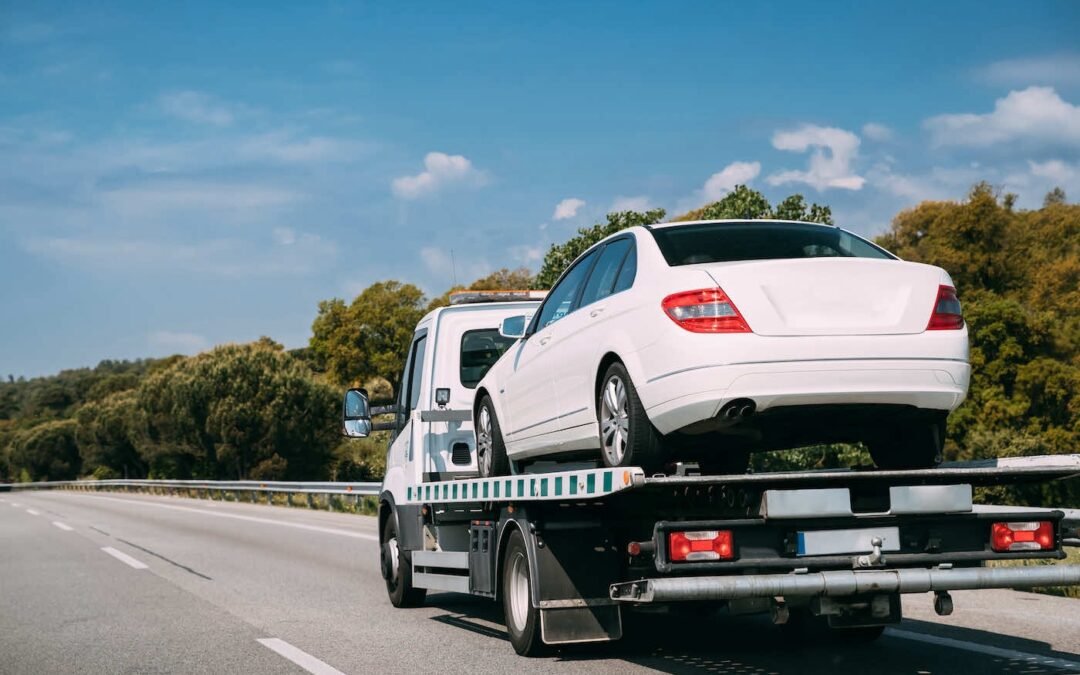
Flatbed towing places your entire vehicle on a flat platform, keeping all four wheels off the ground during transport . This method offers significant advantages for long distance towing :
- No drivetrain stress: With all wheels lifted, there is zero risk of transmission, differential, or transfer case damage regardless of drivetrain type
- Protection from road debris: Your vehicle sits above the road surface, avoiding rocks, gravel, and road spray
- Reduced tire wear: Tires do not contact the road for hundreds of kilometers
- Secure mounting: Industrial-grade straps and wheel chocks prevent any movement during highway travel
- Weather protection: Your vehicle is shielded from winter salt, mud, and harsh conditions
Flatbed towing is ideal for luxury vehicles, sports cars, classic and vintage vehicles, AWD and 4WD vehicles, vehicles with damaged wheels or suspension, motorcycles and powersports equipment, and any vehicle where minimizing wear and exposure is important .
Learn more about the benefits in our article on when flatbed towing is the right choice .
Wheel-Lift Towing
Wheel-lift towing lifts either the front or rear wheels off the ground while the opposite end’s wheels remain on the road . For long distance towing, this method is less common but can work for:
- Front-wheel-drive vehicles with rear wheels down (if drivetrain is intact)
- Rear-wheel-drive vehicles with front wheels down
- Situations where flatbed service is unavailable
However, wheel-lift towing for long distances has important limitations: AWD/4WD vehicles cannot be towed this way without drivetrain damage, the towed wheels accumulate hundreds of kilometers of wear, road debris impacts the towed portion, and it requires careful driveshaft disconnection for some vehicles .
For a detailed comparison of towing methods, see our upcoming post on flatbed towing vs. wheel-lift .
Dolly Towing
Tow dollies place two wheels on a small wheeled platform, an intermediate option between flatbed and wheel-lift . While sometimes used for long distance transport, dollies have limitations with certain vehicle types and may not be suitable for all situations .
How Long Distance Towing Pricing Works
Long distance towing costs are typically calculated per kilometer rather than flat rates . Understanding the pricing structure helps you budget accurately and avoid surprises .
Per-Kilometer Rates
In Regina, professional long distance towing typically costs around $3.25 per kilometer . This rate reflects the specialized equipment, fuel costs, operator time, and insurance required for safe long-haul transport . Some companies may offer volume discounts for very long distances or multiple vehicle transport .
Example Cost Calculations
Using the standard $3.25/km rate , here are approximate costs for common Saskatchewan routes:
| Route | Distance | Approximate Cost |
|---|---|---|
| Regina to Moose Jaw | 70 km | $228 |
| Regina to Yorkton | 190 km | $618 |
| Regina to Swift Current | 240 km | $780 |
| Regina to Saskatoon | 260 km | $845 |
| Regina to Prince Albert | 340 km | $1,105 |
For comparison, national auto transport averages range from $0.50-$1.00 USD per mile for open transport , which converts to approximately $0.80-$1.60 CAD per kilometer—making local Regina rates very competitive .
Factors That Affect Long Distance Towing Cost
Several variables can adjust the base per-kilometer rate :
- Vehicle type and size: Larger vehicles, heavy-duty trucks, and oversized equipment may cost more
- Flatbed vs. wheel-lift: Flatbed transport typically costs more due to specialized equipment
- Time of service: After-hours, weekend, or holiday service may include surcharges
- Route difficulty: Rural routes, unpaved roads, or difficult access points increase costs
- Weather conditions: Winter storms or hazardous conditions may affect pricing
- Urgency: Expedited or same-day service costs more than scheduled transport
- Return trip considerations: One-way towing to remote locations factors in the return journey
Getting Accurate Quotes
To receive an accurate long distance towing quote , provide:
- Exact pickup and delivery locations with postal codes
- Vehicle year, make, model, and condition
- Whether the vehicle runs and drives
- Preferred towing method (flatbed or wheel-lift)
- Desired pickup and delivery timeframe
- Any special requirements (lowered vehicles, oversized tires, modifications)
Reputable towing companies provide clear written quotes before beginning service, ensuring no hidden fees or surprises .
The Long Distance Towing Process Step-by-Step
Understanding what happens from your initial call to final delivery helps set realistic expectations .
1. Initial Contact and Quote
You call the towing company and provide details about your vehicle, locations, and timeline . The dispatcher calculates distance, assesses equipment needs, and provides a detailed quote including the per-kilometer rate and any additional fees .
2. Scheduling and Coordination
Once you accept the quote, the company schedules pickup based on your availability and their fleet capacity . For non-emergency long distance towing, scheduling typically allows 24-48 hours notice, though expedited service is often available for urgent situations .
3. Vehicle Pickup and Loading
The tow operator arrives at the designated pickup location with appropriate equipment . They inspect the vehicle, document its condition (often with photos), verify identification and ownership, and carefully load it onto the flatbed or prepare it for wheel-lift towing .
For flatbed loading, the operator drives or winches the vehicle onto the platform, positions it correctly for balanced weight distribution, and secures it using industrial-grade straps, chains, and wheel chocks .
4. Transport
The operator transports your vehicle along the planned route, maintaining highway speeds and following all safety protocols . Professional drivers monitor the vehicle throughout transport, check securement at fuel stops, and adjust for changing weather or road conditions .
Many companies provide GPS tracking or periodic updates so you know your vehicle’s location and estimated delivery time .
5. Delivery and Unloading
Upon arrival at the destination, the operator carefully unloads your vehicle . You or your designated representative inspect the vehicle together with the operator, confirm the condition matches the pre-transport documentation, and sign delivery paperwork .
Payment is typically due upon delivery, though some companies accept advance payment or work with insurance for accident-related transport .
Insurance Coverage for Long Distance Towing
Understanding insurance coverage protects you financially and provides peace of mind during long distance vehicle transport .
Towing Company Insurance
Reputable long distance towing companies carry comprehensive commercial insurance including liability coverage for accidents during transport, cargo insurance covering your vehicle’s value, and protection against damage during loading and unloading .
Before booking service, verify that the company is properly licensed, bonded, and insured . Ask for proof of insurance and understand what their coverage includes and excludes .
Your Auto Insurance
Some auto insurance policies include towing coverage that extends to long distance transport . Check your policy for:
- Maximum kilometer or dollar limits for towing coverage
- Whether long distance towing is covered or only emergency roadside towing
- If there are restrictions based on reason for towing (breakdown vs. relocation)
- What documentation is required for reimbursement
Accident-Related Transport
If long distance towing results from an accident, your collision or comprehensive insurance may cover the cost . Many towing companies work directly with insurance providers, handling billing and paperwork on your behalf .
Learn more about insurance coordination in our guide to insurance-approved accident towing .
Preparing Your Vehicle for Long Distance Towing
Proper preparation ensures smooth transport and protects your vehicle .
Remove Personal Belongings
Towing companies are not responsible for items left inside vehicles . Remove all personal belongings, valuables, and loose items that could shift during transport . Check the trunk, glove box, center console, and under seats .
Document Vehicle Condition
Take photos or video of your vehicle from all angles before the tow operator arrives . Document existing damage, scratches, dents, or mechanical issues so there is clear evidence of pre-transport condition .
Check Fluid Levels
While your vehicle will not be driven, ensure there are no leaks that could create hazards during transport . Address any significant fluid leaks before scheduling long distance towing .
Secure Loose Parts
Retract or remove external antennas, secure loose trim pieces, and ensure the hood, doors, and trunk latch properly . Anything that could come loose during highway transport should be secured or removed .
Provide Accurate Keys and Access
Give the operator all necessary keys, including any locking wheel nut keys . If your vehicle has an alarm system, provide instructions for disabling it to prevent activation during loading .
Note Special Requirements
Inform the towing company about any special considerations: lowered suspension, aftermarket modifications, non-functional steering or brakes, or damage that affects how the vehicle should be handled .
Long Distance Towing for Specialty Vehicles
Different vehicle types require specialized knowledge and equipment for safe long distance transport .
Luxury and High-Performance Vehicles
Expensive vehicles demand extra care during long distance transport . Flatbed towing is strongly recommended to eliminate any risk of drivetrain damage, tire wear, or exposure to road debris . Many luxury car owners specifically request enclosed flatbed transport for maximum protection, though this service may not be widely available in Saskatchewan .
Classic and Vintage Vehicles
Irreplaceable classic cars require experienced operators who understand their unique needs . These vehicles often have non-standard tow points, sensitive mechanical components, and paint that requires careful handling . Always choose flatbed transport for classics, and clearly communicate any special requirements .
Motorcycles and Powersports
Motorcycles need specialized securing techniques to prevent tipping or damage during transport . Professional motorcycle towing uses wheel chocks, soft straps at proper tie-down points, and sometimes additional support stands .
For detailed information about motorcycle transport, see our upcoming article on motorcycle towing in Regina .
Commercial Vehicles and Equipment
Large trucks, vans, and commercial equipment may require heavy-duty flatbed towing with higher weight capacities . Specialized equipment like scissor lifts, small tractors, or utility vehicles can also be transported via flatbed .
Learn more in our guide to heavy-duty towing in Regina .
Electric and Hybrid Vehicles
Electric vehicles (EVs) and hybrids should be transported via flatbed whenever possible . Towing these vehicles with wheels on the ground can damage electric motors and regenerative braking systems . Additionally, tow operators need to understand proper lifting points to avoid damaging battery packs .
Winter Considerations for Long Distance Towing in Saskatchewan
Saskatchewan winters create unique challenges for long distance vehicle transport .
Weather-Related Delays
Winter storms, whiteout conditions, and highway closures can delay scheduled pickups or deliveries . Professional towing companies monitor weather forecasts and communicate proactively about potential delays .
Road Condition Adjustments
Icy highways require reduced speeds, increasing transport time . Operators may choose alternate routes or wait for improved conditions to ensure safe transport .
Vehicle Protection
Flatbed towing provides significant protection from winter road salt, spray, and debris that would otherwise coat your vehicle during long distance transport . This is especially important for classic cars, luxury vehicles, or any vehicle you want to protect from winter corrosion .
For more about winter vehicle challenges, see our article on how Regina’s winters affect your car .
Cross-Border and Interprovincial Transport
Towing vehicles across provincial or international borders involves additional considerations .
Documentation Requirements
For interprovincial transport within Canada, carry vehicle registration, proof of ownership, and your driver’s license . For cross-border transport to the United States, additional customs documentation may be required including title or bill of sale, proof of citizenship, and customs declaration forms .
Carrier Licensing
Ensure your towing company is licensed for interprovincial or international transport . Not all local towing companies have the necessary permits and insurance for cross-border work .
Communication and Coordination
Cross-border transport requires advance planning and clear communication . Delays at border crossings should be factored into delivery timelines .
Choosing a Long Distance Towing Provider
Selecting the right company for long distance vehicle transport requires research .
Experience and Reputation
Look for companies with years of experience in long distance towing, positive customer reviews and testimonials, and established presence in the Regina area . Companies with 15+ years of experience typically have refined their processes and invested in quality equipment .
Equipment and Fleet
Verify that the company has appropriate equipment for your vehicle type: modern flatbed trucks for safe transport, heavy-duty options if needed, and well-maintained fleet that meets safety standards .
Licensing and Insurance
Confirm the company is fully licensed, bonded, and insured for commercial towing operations . They should willingly provide proof of insurance and explain their coverage .
Clear Communication and Pricing
Professional companies provide detailed written quotes, explain all charges clearly, communicate pickup and delivery times, and remain accessible throughout the process .
Local Knowledge
Regina-based towing companies understand local and provincial routes, are familiar with Saskatchewan weather patterns, and have established reputations in the community .
Frequently Asked Questions
How much does long distance towing cost in Saskatchewan?
Long distance towing in Regina typically costs around $3.25 per kilometer . For example, Regina to Saskatoon (260 km) would cost approximately $845, while Regina to Moose Jaw (70 km) would be around $228 . Final costs depend on vehicle type, towing method, and any special requirements .
How long does long distance towing take?
Transport time depends on distance and weather conditions . Regina to Saskatoon typically takes 3-4 hours including loading and unloading . Scheduling the pickup may add 24-48 hours for non-emergency service, though same-day options often exist for urgent situations .
Is flatbed towing necessary for long distance transport?
While not always mandatory, flatbed towing is strongly recommended for long distance transport . It protects your vehicle from drivetrain stress, road debris, and tire wear, and is essential for AWD vehicles, luxury cars, classics, and motorcycles .
Can I ride in the tow truck during long distance transport?
Most towing companies allow one passenger in the tow truck cab during transport . However, verify this policy when booking, as insurance and safety regulations may vary by company .
What if my vehicle breaks down far from Regina?
Call a Regina-based towing company that offers long distance service . They will dispatch a truck to your location and transport your vehicle back to Regina or to your preferred repair facility . Response times will be longer for remote locations .
Does insurance cover long distance towing?
Some auto insurance policies include long distance towing coverage, particularly if the tow results from a breakdown or accident . Check your policy for coverage limits and requirements . For accident-related towing, collision insurance may cover transport costs .
Can you tow my vehicle to another province?
Yes, reputable Regina towing companies provide interprovincial transport throughout Western Canada . Ensure the company is properly licensed for interprovincial work and discuss any additional documentation requirements .
Get Professional Long Distance Towing in Regina
When you need safe, reliable long distance vehicle transport in Saskatchewan, professional long distance towing from Regina provides peace of mind . Whether you are relocating, purchasing a vehicle from another city, or dealing with a breakdown far from home, experienced operators ensure your vehicle arrives safely .
Our long distance towing services include:
- Competitive pricing at $3.25 per kilometer
- Modern flatbed and wheel-lift equipment
- Experienced operators with years of long-haul experience
- Clear written quotes with no hidden fees
- Fully licensed, bonded, and insured
- Transport throughout Saskatchewan and neighboring provinces
- 24/7 availability for emergency situations
Whether you need to transport one vehicle or coordinate multiple moves, we provide the professional service and attention to detail your vehicle deserves .
For comprehensive towing services including flatbed towing, heavy-duty transport, and 24/7 roadside assistance, Regina’s trusted towing professionals are here to help.
Need long distance towing? Call (639) 477-9924 for a free quote and scheduling.
Note: All prices mentioned in this article are provided for general reference and informational purposes only. These prices are not fixed and may vary depending on facts, market conditions, location, time, availability, or other relevant factors. Actual prices may change without prior notice. Readers are advised to verify details independently before making any decisions.